
Spain Train Crash Leaves 68 Dead and Six Canadians Injured Amid Ongoing Investigation
October 29, 2026 Team Contributor
A devastating Spain train crash has left at least 68 people dead and dozens injured, including six Canadians, after two high-speed trains collided south of Madrid on Wednesday morning.
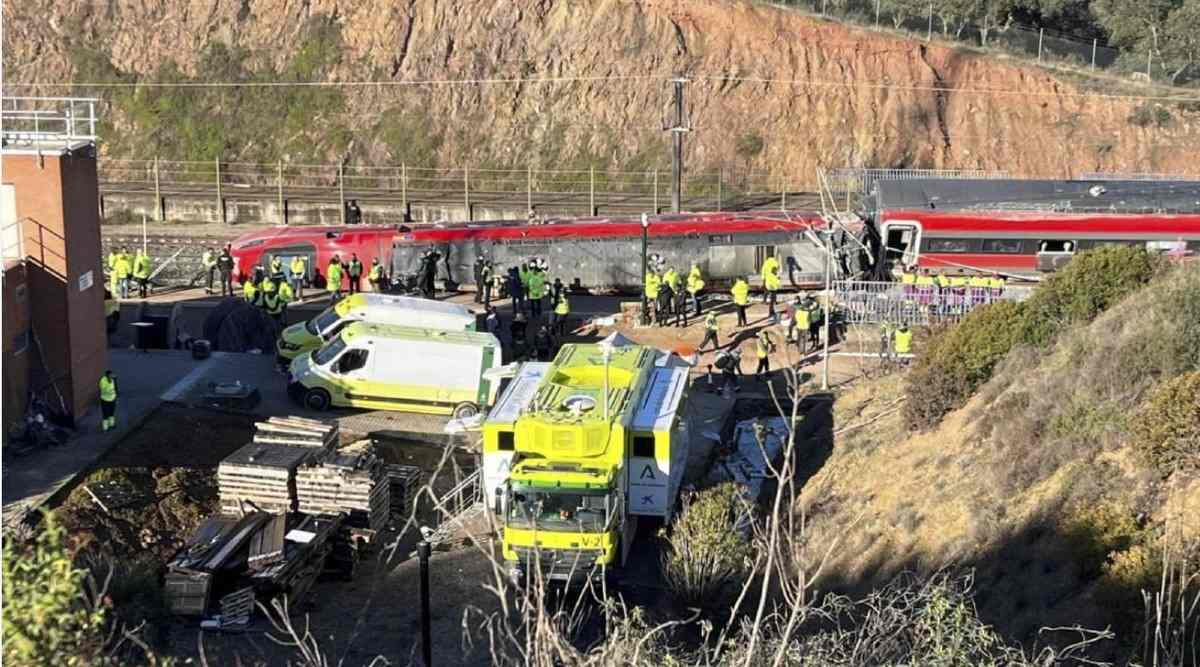
The accident occurred near Urda, Spain, in the province of Toledo, when a Renfe AVE service travelling from Madrid to Seville struck an Iryo train that had stopped on the tracks. Authorities said the collision happened shortly before 9 a.m., sending several carriages off the rails and down an embankment.
Reports confirmed that six Canadians were injured in the accident, while one additional Canadian remained unaccounted for as officials continued to gather information from Spanish authorities.
Prime Minister Mark Carney described the incident as a tragedy and said Canada is prepared to assist affected citizens.
“Our thoughts are with their families, the victims and their loved ones in the days and weeks ahead,” Carney said. “If there’s assistance that we can give, we would provide.”

More than 500 passengers were travelling on the trains
Regional officials said a total of 544 passengers were on board the two services involved in the train crash in Spain.
The Renfe train carried 397 passengers, while the Iryo service had 147 passengers onboard, including a baby.
Emergency crews, firefighters, military personnel and medical helicopters were deployed to the scene as rescuers worked throughout the day to reach trapped passengers and search damaged carriages.
Images from the site showed multiple rail cars derailed, with at least three carriages leaving the tracks following the impact.
Castilla-La Mancha regional president Emiliano García-Page said authorities feared the death toll could continue to rise as crews gained access to heavily damaged sections of the wreckage.

Investigation focuses on signalling failure
Spanish Transport Minister Óscar Puente said preliminary findings point to a possible signalling failure and an operational error before the Spain train accident occurred.
According to officials, a security system malfunction affected a 63-kilometre stretch of railway shortly after 8:30 a.m., forcing trains in the area to stop.
The Renfe service was later authorized to continue its journey. It subsequently collided with the stationary Iryo train at approximately 8:53 a.m.
“The train should never have been told to start moving again,” Puente told reporters, adding that investigators continue to examine the sequence of events.
Authorities are also looking into reports of a possible Signal Passed At Danger incident, commonly known in the rail industry as a SPAD, where a train proceeds beyond a stop signal.
Deadly collision renews scrutiny of Spain’s high-speed rail system
The Spain train crash marks the country’s second fatal high-speed rail collision of 2026.
In January, 46 people died in another collision involving trains operated by Renfe and Iryo near Adamuz in southern Spain.
Until this year, Spain’s dedicated high-speed network had not recorded a fatal accident since it opened in 1992.
Spain operates approximately 3,900 kilometres of high-speed railway, making it one of the largest such networks in Europe. The growth of high-speed traffic and the arrival of private operators have transformed rail travel across the country over the past decade.
Spanish Prime Minister Pedro Sánchez announced three days of national mourning and pledged a full investigation.
“If there has been negligence, it will come to light; if there have been failures in the system, we will respond with the utmost firmness,” Sánchez said during a visit to the accident site.
Spain works to restore confidence in its rail network
The Spain train crash has forced the suspension of rail services between Madrid, Ciudad Real and parts of Andalusia, affecting more than 100 train operations.
Renfe said passengers on affected services can change or cancel tickets free of charge, while alternative transportation is being arranged for some travellers.
Canadian tourists visiting Toledo Spain or travelling aboard the Spain train network, rail operators are advising passengers to monitor service updates and allow additional time for journeys.
As investigators work to determine the exact cause of the train accident Spain authorities describe as unprecedented, the details are expected to influence future rail safety measures across one of Europe’s most widely used high-speed transport systems.
About the Author