
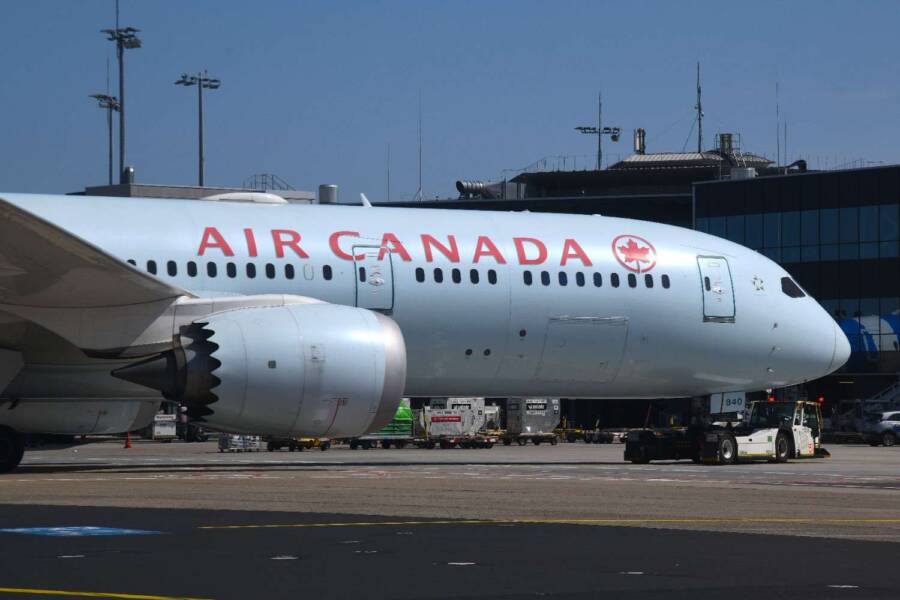
Air Canada Flight Diverted After Mid‑Air Captain Medical Emergency
June 25, 2026 Team Contributor
An Air Canada flight was diverted mid-journey after the captain suffered a medical emergency, forcing an unexpected landing and triggering tense moments onboard.
The Air Canada flight diverted incident involved flight Air Canada Flight AC7664, a De Havilland Q400, which was travelling from Newark to Halifax. In the middle of the route, it was diverted to Boston Logan Airport on 23rd June 2026 after the captain became incapacitated in-flight.
The situation escalated quickly during the flight carrying 61 passengers. The aircraft was later brought back under control by the first officer, who assumed full command and safely conducted the emergency landing.
“The flight started swerving violently” – what happened mid-air
According to reports, the flight captain had to be removed from the cockpit during the flight, prompting swift action by passengers and crew members.
“…Within a few moments, flight attendants entered the cockpit frantically, and a few moments later, he was dragging one of the pilots out of the cockpit,” said the passenger, Rodney McDonald.
“It was really horrifying. Myself and about four others worked to get him under control. It was a fairly strenuous 40 minutes keeping him down,” McDonald continued.
Despite this disruption, the aircraft safely landed in Boston without any harm, demonstrating the standard aviation safety protocols in place for such emergencies.
Air Canada flight diverted – response and safe landing
Emergency responders met the flight on arrival, and the captain was then taken for quick medical treatment. Passengers were then assisted with onward travel arrangements by the airline.
Aviation procedures require that the commercial aircraft be operated by at least two qualified pilots to ensure continuity in the event of any operational issue. Safe diversion highlights how such systems operate in real time.
The Air Canada flight diversion incident serves as a reminder that even the most unexpected in-flight emergencies can be effectively managed through procedures and training.
Yes, the outcome could have been serious, but in a case like this, a key aviation reality is reinforced: safety systems are engineered to handle the unexpected.
About the Author