
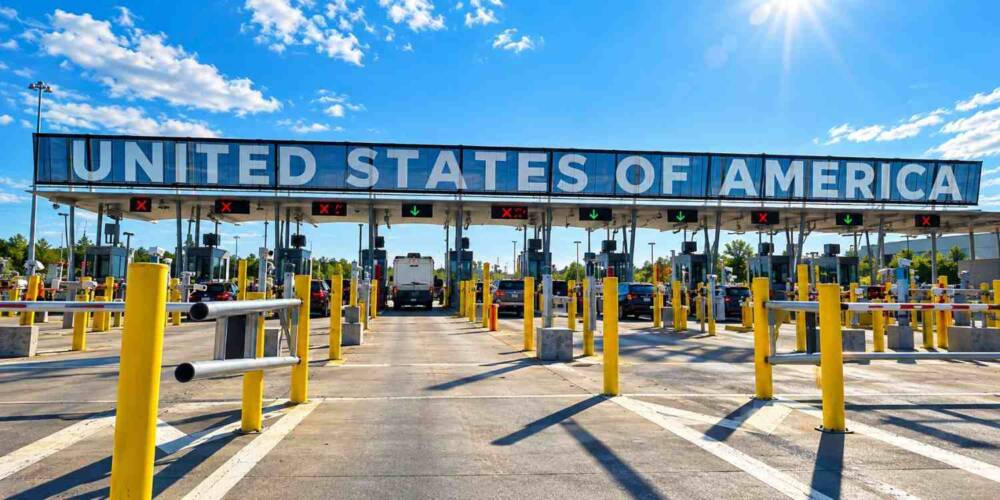
Canadian Snowbirds Face New U.S. Registration Rules Ahead of Winter Travel
September 14, 2026 Team Contributor
Canadian snowbirds preparing for extended U.S. stays this winter may see a measure of administrative relief after U.S. authorities revised guidance surrounding the long-standing Alien Registration requirement.
The change affects Canadians who enter the U.S. through Trusted Traveler Programs, including NEXUS, and could benefit roughly 1.6 million to 1.7 million Canadians. For travellers preparing winter escapes to Florida, Arizona and other popular destinations, the update removes a requirement that caught some visitors off guard during last year’s stricter enforcement push.
Canadians planning cross-border trips may also want to review these Canada border tips.
What changed for Canadian Snowbirds?
The U.S. Alien Registration Act dates back to 1940 and requires non-U.S. citizens staying in the country for 30 days or longer to register with the federal government.
Although the rule technically applied to Canadians for decades, enforcement was limited until the Trump administration intensified compliance measures in 2025. Under the stricter policy, visitors aged 14 and older staying 30 days or more were required to register, provide fingerprints and photographs, and pay a US$30 fee. Failure to comply could lead to fines of up to US$5,000 and possible prosecution.
At the time, former Homeland Security Secretary Kristi Noem said, “The Trump administration will enforce all our immigration laws – we will not pick and choose which laws we will enforce. We must know who is in our country for the safety and security of our homeland and all Americans.”
NEXUS travellers are now exempted from registration filing
According to an update in the U.S. Alien Registration Act issued by the Canadian Snowbirds Association, some Canadians are now considered already registered.
“NEXUS members who were last admitted to the United States through NEXUS are now considered to be already registered,” the association said.
Updated guidance from U.S. Citizenship and Immigration Services also includes travellers who were last admitted through Trusted Traveler Programs such as NEXUS, SENTRI, FAST and Global Entry.
Under the updated guidance, these travellers do not need to submit Form G-325R merely because their stay extends beyond 30 days.
The exemption comes with a condition. Travellers must have most recently entered the United States through one of the qualifying programs; NEXUS membership by itself does not confer registered status.
Last year’s rollout confused many at the border
The change in enforcement left some Canadians navigating a more demanding border process than expected.
At the Peace Arch crossing, B.C. snowbirds Jacquie and Steve Ree faced a more stringent arrival process, with fingerprints and photographs taken and a US$60 charge imposed.
Mrs. Ree stated, “I’m watching them open all our hatches, and we’re thinking, ‘Oh my god’. They went through our whole RV.”
She later described the fee as a “bit of a money grab.”
“They didn’t really know what they were doing,” she said. “I felt bad for them.”
For Canadian snowbirds, the latest guidance promises a more orderly and seamless entry experience this winter.
Will Canadians still head south?
The rule change arrives at a time of renewed political and trade tensions between Canada and the United States.
Despite a decline in Canadian visits to the U.S. during previous boycott movements, many snowbirds continued travelling south. What began as a winter escape has, over decades, grown into something endearing through property, business, friendships and established seasonal communities.
As Stephen Fine, president of Snowbird Advisor, previously noted, “Snowbirds are more tied to the U.S. than other travelers.”
Its impact on Canadians considering a return remains uncertain, with the response still unfolding. What is clear is that travellers planning U.S. stays of more than 30 days should verify how they entered the country and whether the updated registration guidance applies to them before leaving home.
Canadians planning or undertaking international travel should also remain informed of Canada’s latest Ebola-related border health measures and traveller guidance.
As the winter travel season approaches, the updated U.S. registration policy could remove one concern for many snowbirds, but it is unlikely to end the broader debate about Canada-U.S. travel that continues to shape decisions on both sides of the border.
About the Author