
Japan Earthquake – Is It Safe for Canadians to Travel After the 7.1-Magnitude Quake?
July 29, 2026 Team Contributor
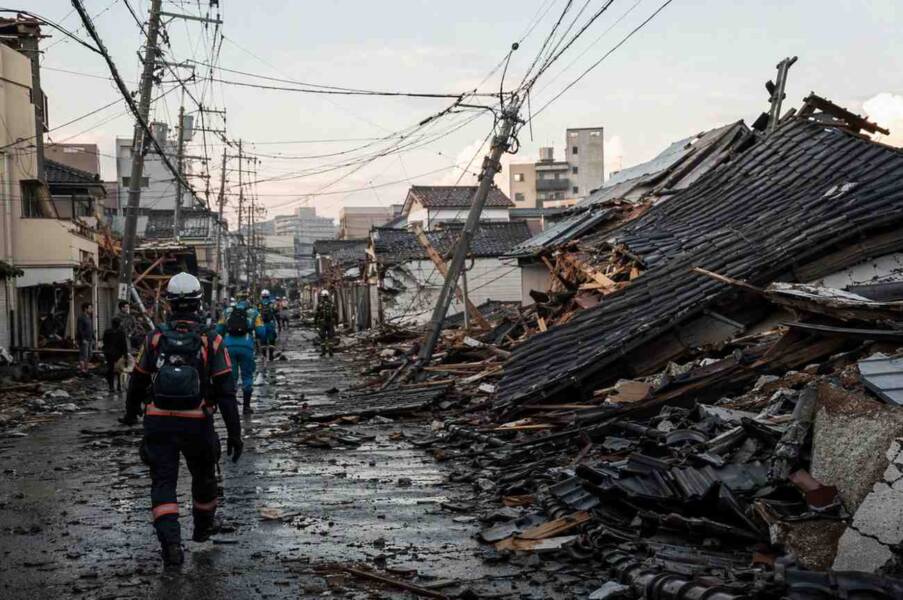
A powerful earthquake in Japan has struck Kumamoto Prefecture on the southern island of Kyushu, setting off an urgent search-and-rescue operation and disrupting critical transportation links across the region. The development comes as Japan continues to rank among the most sought-after overseas destinations for Canadian travellers, particularly those exploring regions beyond Tokyo and Osaka.
The seismic event hit on July 28, 2026, registering magnitude 7.1 according to the Japan Meteorological Agency and 6.8 according to the U.S. Geological Survey, as emergency crews worked to assess damage and assist affected communities. Popular visitor routes across Kyushu have since faced significant disruption, creating uncertainty for travellers with upcoming plans in the region.
Widespread destruction followed the quake, with critical infrastructure damaged, transportation networks disrupted and thousands forced into evacuation centres. A shopping mall collapse, train derailments, air travel disruptions and dozens of injuries underscored the scale of the disaster as the death toll climbed further on July 29, 2026.
Sanae Takaichi, Japan’s first female Prime Minister, said, “There are people who are still waiting to be rescued, and it’s a race against time. We will go all out to find and rescue as many people as we can.”
Tuesday’s Japan Earthquake Leaves Trail of Destruction

- Death toll reached at least 13, with 50+ injuries reported.
- Multiple people remained missing as rescue operations continued.
- More than 9,000 residents moved into 500+ evacuation centres.
- Around 36,900 homes lost power and 9,500 households were without gas.
- Communication networks were disrupted in several affected areas.
- Temperatures above 32 C added pressure on evacuation efforts.
- The Aeon Mall in Kashima suffered a partial collapse following an explosion linked to a suspected gas leak.
- Japan’s Self-Defense Forces joined rescuers searching the damaged mall.
- Roads, utilities and transport links sustained significant damage.
Current Travel Disruptions Across Kyushu
The latest kumamoto earthquake has disrupted several transportation corridors used by domestic and international travellers.
Rail operators, highway authorities and bus companies continue inspecting routes before resuming full services. Some disruptions are expected to continue in the coming days.
Travellers planning to move through Kyushu should check operator updates before departure.
Rail services
- The Kyushu Shinkansen remains suspended between Hakata and Kagoshima-Chuo.
- Service between Hakata and Kumamoto could resume, but the section south of Kumamoto remains closed until further notice.
- The Sanyo Shinkansen and Nishikyushu Shinkansen continue operating.
- The JR Misumi Line remains suspended between Uki and Misumi.
- The JR Kagoshima Line and Hisatsu Orange Railway remain suspended between Arao and Sendai.
- The JR Hohi Line remains suspended between Kumamoto and Bungo-Taketa.
- Tram services in Kumamoto City resumed on July 29.
Flight and airport updates
Air travel has recovered more quickly than ground transportation, providing a key connection into the affected region.
- Flights to and from Kumamoto Airport resumed on July 29.
- Other airports across Kyushu remain operational.
- Airport bus services linking Kumamoto Airport and the city have resumed.
Bus services
Several intercity routes remain unavailable as inspections and recovery efforts continue.
- Many expressway buses serving Kumamoto Prefecture are suspended.
- The B&S Miyazaki service between Yatsushiro and Miyazaki is suspended until at least August 7.
- The Trans-Kyushu bus route between Kumamoto and Beppu/Oita remains suspended.
- Bus services between Kumamoto and Takachiho remain suspended.
- Local bus operations around Mount Aso have resumed.
Highway closures
- Approximately 100 kilometres of the Kyushu Expressway, between Mashiki Kumamoto Airport IC and Ebino IC, remain closed until further notice.
Aftershocks Raise Fresh Safety Concerns
While rescue efforts remain the priority, officials are warning residents and visitors about continuing seismic risks. The region faces the possibility of aftershocks and landslides, especially in areas already weakened by the quake. Authorities have urged the public to remain alert.
Safety concerns being monitored:
- Potential aftershocks across affected areas.
- Increased landslide risks in unstable terrain.
- Localised power and utility disruptions.
- Ongoing inspections of transportation infrastructure.
Travel Advisory for Canadians
For travellers planning holidays in Japan, the impact remains concentrated largely within parts of Kyushu rather than the entire country. Major destinations including Tokyo, Osaka, Kyoto and Hokkaido are operating normally. Travellers heading to Kumamoto and nearby regions should expect changing schedules and possible delays.
Japan earthquake response guidance for travellers
- Exercise caution.
- Monitor local media and official updates.
- Follow travel advice from local and national authorities.
- Comply with evacuation orders if issued
- Check airline and rail updates before departure.
- Allow extra travel time when connecting through Kyushu.
- Review travel insurance coverage for disruption-related expenses.
- Monitor local emergency advisories during your stay.
Japan’s Tourism Sector Faces Another Challenge
The latest Japan earthquake emergency arrives while parts of the country continue recovering from the 2024 Noto Peninsula disaster. Although most tourism infrastructure nationwide remains operational, authorities now face the challenge of restoring confidence and transportation links in another important visitor region.
Recovery efforts continue across Kyushu
- Rescue operations remain ongoing.
- Transport services are gradually being restored.
- Safety inspections continue across Kyushu.
- Travellers should expect changing conditions over the coming days.
While the disaster underscores the importance of monitoring local advisories and transportation updates, it also highlights Japan’s extensive emergency preparedness measures and well-established disaster response systems. For travellers, staying informed and remaining flexible can help ensure a safer and more confident journey as recovery efforts continue.
Important Links:
Japan Meteorological Agency (JMA) – Earthquake Information
Kumamoto Prefecture Earthquake Updates
Canadian advisory for Japan travel
About the Author