
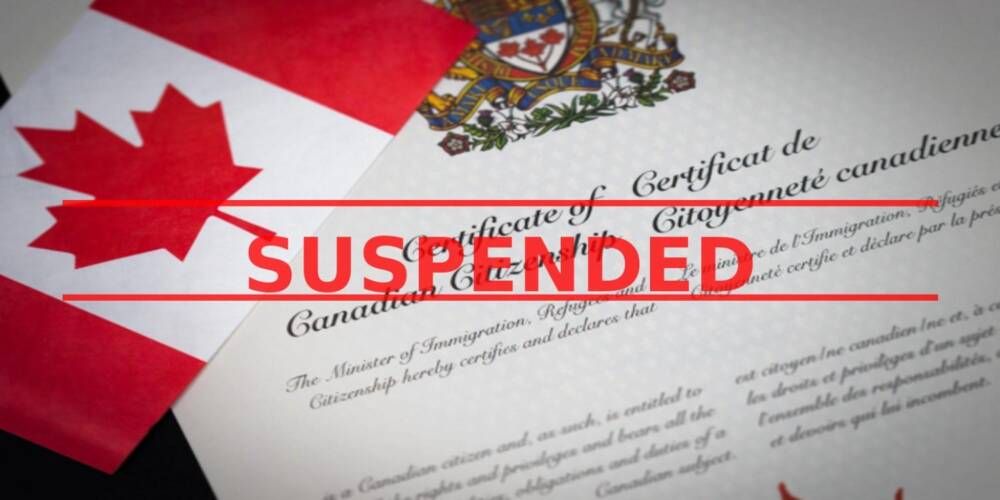
‘Lost Canadians’ Citizenship Certificates Suspended – Who Is Affected and What Happens Next?
June 16, 2026 Team Contributor
Canada’s sweeping citizenship reform ‘Bill C‑3’ was meant to restore rights to thousands of so‑called “Lost Canadians.” Instead, months after coming into force in 2025, it has triggered uncertainty as the federal government moves to suspend some newly issued citizenship certificates for review.
As per a CBC News report, some people granted citizenship through the new law have been asked to return their certificates for additional verification of their application records. Authorities have raised concerns that some applicants did not submit the necessary original records to verify their family ties to Canada.
The development has sparked concern among recipients across the globe, many of whom had begun building their lives in Canada or were preparing to move there under the new citizenship rules.
Who Are the ‘Lost Canadians’?
The term ‘Lost Canadians’ refers to those people who either lost or never obtained citizenship due to outdated provisions in earlier laws. Some cases also include discrimination tied to gender, marital status, or birth abroad.
Canada’s Citizenship Act, introduced in 1947 and updated in 1977, established citizenship through birth, naturalization, and descent. However, a 2009 amendment introduced a ‘first-generation’ limit, preventing Canadians born abroad from automatically passing citizenship to their children who are also born outside the country. (Source: Government of Canada)
What Bill C‑3 Changed – New Rules for Canadian Citizenship
Bill C‑3, which received Royal Assent on November 20, 2025, and came into force on December 15, 2025, fundamentally reshaped citizenship by descent.
The law removed the strict first‑generation limit and retroactively recognized many previously excluded individuals as citizens.
It also introduced a “substantial connection” requirement going forward, meaning Canadian parents born abroad must have spent at least three years in Canada before passing citizenship to children born outside the country.
According to ImmiNorth data, thousands became eligible almost overnight, with Immigration, Refugees and Citizenship Canada (IRCC) issuing thousands of citizenship certificates in early 2026.
Why “Lost Canadians” Certificates Are Now Under Scrutiny
Government officials are revisiting some applications to verify that the documentation submitted was enough to confirm eligibility through Canadian descent.
As reported by CBC News, Peggy Sun, registrar of Canadian citizenship, stated in the notice: “The purpose of this letter is to inform you that I have information in my possession that indicates that you may not be entitled to hold a Canadian certificate of citizenship.”
Reports suggest that at least thousands of people may be affected, with many forced to re‑establish ancestral links through detailed historical records, sometimes spanning multiple generations.The review process targets the certificate, not necessarily the individual’s citizenship status, which may still stand under the law. (Source: IRCCGUIDE)
What this Means for Canadian Travellers and Families
- Proof matters as much as eligibility: Establishing citizenship now depends heavily on strong, verifiable documentation, especially for ancestry‑based claims.
- Expect stricter checks and delays: Applicants may face longer processing times, document reviews, or certificate suspensions that can disrupt travel or relocation plans.
- Impact on mobility and paperwork: Delays in citizenship certificates can affect access to passports, legal identification, and the ability to live or work in Canada.
- Families may face uncertainty: Those with relatives classified as “Lost Canadians” could see complications in family reunification or residency transitions.
- Travel plans may need flexibility: Visitors or dual nationals should plan for possible administrative hurdles if their or their family members’ citizenship status is under review.
Although the legislation broadened citizenship eligibility, some applicants are still waiting for clarity as authorities review their supporting documents. Meanwhile, Canada’s passport system is pressing ahead with latest reforms, including faster processing times and a new 30-day service guarantee.
About the Author